
Have you ever wondered why ACM SIGDOC’s Student Research Competition (SRC) remains a highlight of our annual conference? Read more about the enriching experience from one of our winners, the now Dr. Rachael Jordan!
You can also learn more about how the SRC on our site, or you can navigate to the 2025 SIGDOC conference in Lubbock, TX to learn more there.
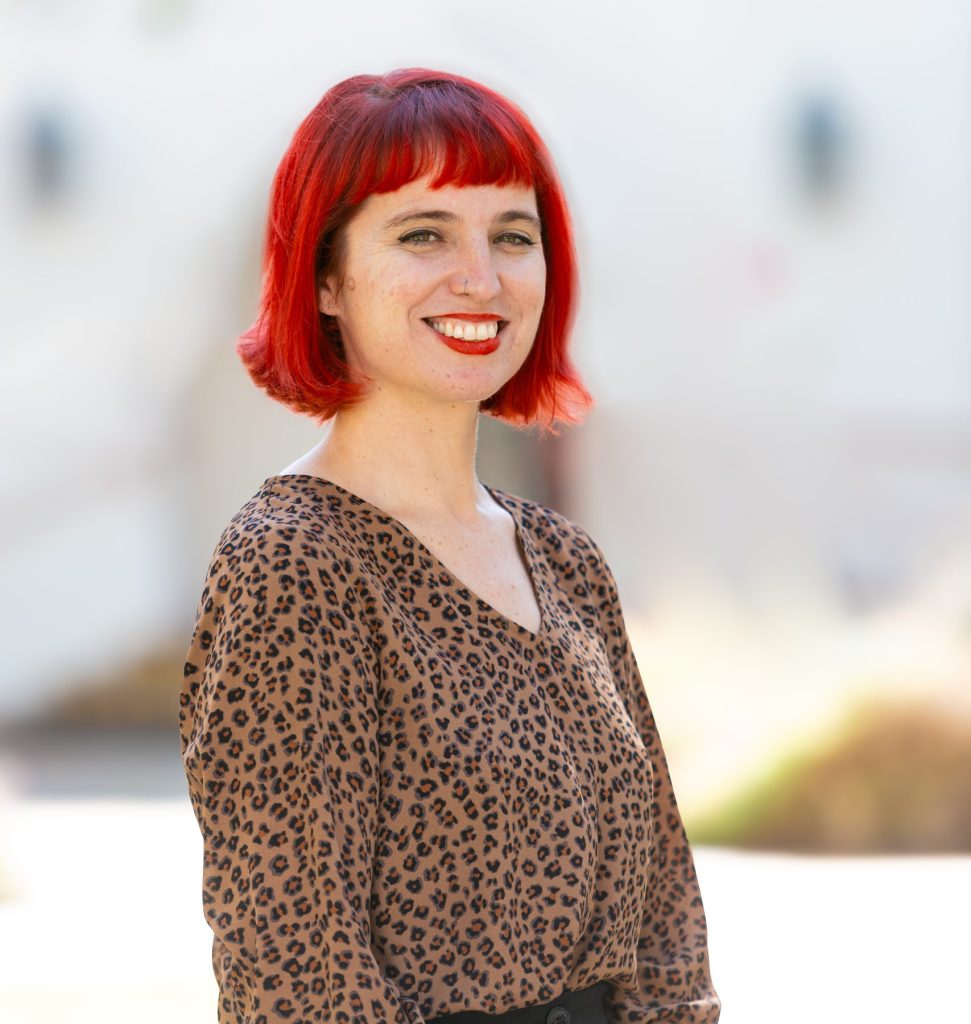
About Dr. Rachael Jordan
Rachael Jordan (she/her) will be an assistant professor at the University of South Carolina beginning Fall 2025. She completed her PhD in Technical Communication & Rhetoric at Texas Tech University, and she studies queer rhetorics’ application to technical communication, particularly in digital spaces. Though the theoretical lens and object of study may differ, she aims to study how the “mundane texts,” such as infrastructural documents like terms of service, we both use and create impact marginalized groups.
1. Tell us about your SRC projects in 2022, 2023, and 2024.
I attended my first SIGDOC in 2022 as a second year graduate student. Since I had never been to the conference before I decided to present as part of the regular poster session which gave me a front row seat for the Student Research Competition. Though I presented on some emerging research I was conducting on interface design and got amazing and generative feedback from scholars such as Dr. Donnie Johnson Sackey, I also got to watch two of my graduate student colleagues – Meghalee Das and Jiaxin Zhang – go on to win the top two spots in the SRC. Inspired by them, I knew I eventually wanted to participate in the SRC myself.
The following year, I presented on a panel as part of the regular conference. At this point, I was beginning my dissertation research, and presented on queer qualitative methods. Conversations about my presentation in Orlando that year led to my inclusion in an edited collection about research practices in TPC where I continued to develop the ideas first shared at the conference. Once again, I went to the SRC poster session and the final round.
Finally, in Fall 2024, in my last semester as a graduate student, I decided to participate in the SRC myself. I took a chapter from my dissertation to present and it felt like I had come full circle. The timing was incredible because I was also on the job market and the SRC gave me the opportunity to practice talking about my research with a range of audience members from other graduate students, to senior scholars, to industry practitioners. Many of the audience members at the SRC finals would later be on search committees or at campuses where I was applying to work and the SRC gave me a chance to “preview” my job talk and the type of scholar that I am.
2. How would you describe your experiences attending SRC three times?
Though I only participated in the SRC once, attending the poster sessions and final presentations the two years prior helped me see the incredible research that graduate students in our field are doing. It also gave me the chance to see how the judges and other members of our field asked questions and engaged with that work. During my own competition, I got wonderfully generative questions about the larger impact of my study which then helped prepare me for those same questions while I was on the job market.
Again, the practice I got in talking about, discussing, and answering questions about my research was invaluable. In one poignant moment at the final presentations, we were asked what our research’s “so what?” is and it was the most generative part of the process. Another question, from Dr. Derek Ross, asked me specifically about how I handle “push back” about some of my more sensitive research topics (relating to sexual content moderation) which helped me prepare for the same questions I got while on the job market and as I’m moving into a position where the state has more anti-DEI laws than my current one.
3. Did your SRC experiences influence your research projects? If so, how?
My feedback and questions on that first poster presentation definitely influenced me. I realized I was not an interface design scholar! However, the types of social media platforms I was using at that time stayed, but my focus shifted. Rather than look at interface design, I began to think about Terms of Service and community guidelines and their implications for content moderation. This eventually became the topic of my dissertation. Also, participating in these SIGDOC activities also lead to publication opportunities. A graduate student from Utah State University talked with me about my poster in 2022 and then, based on the topic, put me in touch with Dr. Avery Edenfield who has graciously worked with me on a research project we have in development and eventually served as an outside reader on my dissertation. Taking part in SIGDOC activities helped connect me to a scholar whose work I admired.
4. Can you share any suggestions with future SRC participants in terms of lessons learned and best practices?
I highly suggest getting feedback on your poster. Whether that’s from your advisor, fellow graduate students, or someone else you trust. For networking, try to say “yes.” I know that conferences can be exhausting, but going to panels you’re interested in, attending the SRC, and participating in the events will introduce you to scholars in the field, other graduate students, and industry professionals. Our field is small and a bonus of that is being able to talk to, and engage with, the scholars we all admire and to meet other graduate students doing wonderful work (just like you are).
Learn more about how the SRC or the 2025 SIGDOC conference in Lubbock, TX.